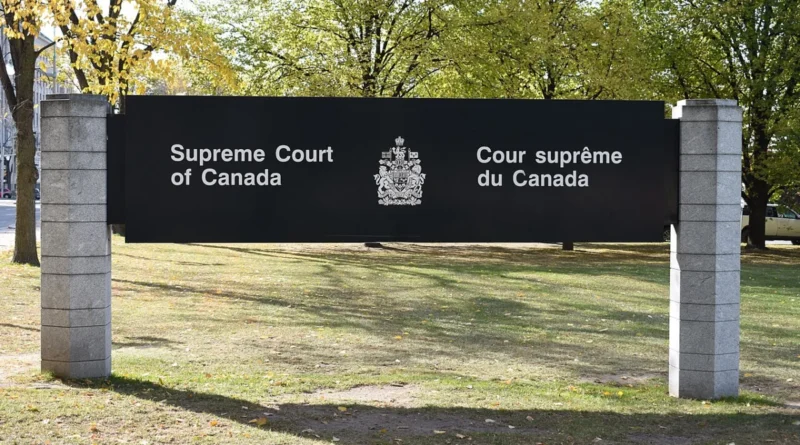
Canada’s supreme court largely upholds Quebec ban on religious symbols
Canada’s supreme court has largely upheld a Quebec law that bars public sector workers from wearing conspicuous religious symbols, ruling 6-1 on Friday that the province was entitled to shield the measure from most court challenges through the constitutional notwithstanding clause.
Bill 21, passed in 2019, prohibits workers including teachers, police officers, lawyers and judges from wearing items such as a hijab, turban, kippah or cross while on duty. Writing for the majority, chief justice Richard Wagner said the law is rooted in Quebec’s “legitimate and historical commitment to ensuring the laicity of the state in a free and democratic society.”
The court said the case involved four days of hearings, among the longest in its 151-year history, with 51 interveners including six attorneys general, also a record. Its website crashed on Friday morning as the judgment was released.
What the ruling means
At the center of the case was the notwithstanding clause, which lets federal or provincial governments override certain charter rights, including religious freedom, equality and speech, for renewable five-year periods. Quebec’s use of the clause with Bill 21 was notable because it was invoked pre-emptively to shield the law from challenges, a step the court found permissible here.
The court rejected most arguments that Bill 21 violated charter protections not covered by the clause, including guarantees on the equality of men and women and the education rights of Quebec’s English-speaking minority.
In its 520-page judgment, the court did find that part of the law infringed democratic rights, including by preventing elected members of Quebec’s National Assembly who wear face coverings for religious reasons from taking part in the legislative process. By a 4-3 margin, it also endorsed the ability of lower courts to issue “judicial declarations” that a law protected by the clause violates the charter, even though the law may stand.
Reaction
The decision was welcomed by some in Quebec who saw it as a vindication of the province’s position, and criticized by religious civil liberties groups. Stephen Brown, chief executive of the National Council of Canadian Muslims, told reporters that governments should not be able to remove the rights of minorities because it is popular. “If that is the case, we don’t have a charter of rights and freedoms. We have a charter of suggestions and permissions,” he said.
The law has been upheld at lower levels. In April 2021, a Quebec superior court judge described its effects as “cruel” and said it “dehumanises” those it targets, but concluded it could not be struck down because of the notwithstanding clause. The province’s court of appeal upheld the law on the same grounds in February 2024.
Political backdrop
Quebec’s governing Parti Québécois has sought confrontations with the federal government and institutions such as the supreme court. Premier Paul St-Pierre Plamondon had previously said the province’s right to decide its own laws was at risk. The ruling comes as Quebec’s newly elected government has shown an eagerness to clash with Prime Minister Mark Carney.
Also on Friday, an appeal was due to be heard over a superior court decision requiring members of the National Assembly to swear allegiance to King Charles to sit in the Salon Bleu, the assembly chamber. Lawmakers from several parties have recently refused to take the oath.