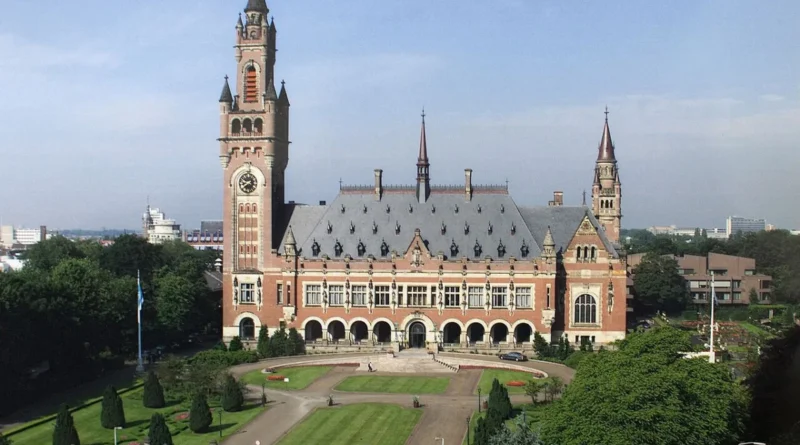
UN court finds Myanmar committed genocide against Rohingya
Myanmar committed genocide against its Rohingya minority during a 2017 military crackdown, the International Court of Justice ruled Thursday, marking the first time an international court has found a state responsible for genocide.
The UN’s top court found by a majority of nine votes to six that Myanmar had the “intention to destroy” a substantial part of the Rohingya population. Presiding judge Yuji Iwasawa said the court concluded that “genocidal intent is the only reasonable inference that can be drawn from the evidence.” The panel also found by majority that Myanmar violated several other provisions of the 1948 Genocide Convention.
The case was brought by The Gambia and centered on “clearance operations” launched in Rakhine State, home to many of the Rohingya Muslim minority. The operations followed deadly attacks by the Arakan Rohingya Salvation Army on more than 30 police posts. Myanmar troops, backed by local Buddhist mobs, then carried out a wave of violence that drove more than 700,000 Rohingya to flee to Bangladesh by land and sea.
Court details killings and destruction
The court determined that around 10,000 Rohingya were violently killed during the operation and that approximately 815,000 people were targeted in some way. Iwasawa described indiscriminate killings, the execution of men, widespread sexual violence, extreme violence against children and the deliberate burning of Rohingya homes. He said the military also attacked Rohingya as they fled toward Bangladesh.
The judges found that Myanmar destroyed evidence extensively, including by burning or disposing of bodies and bulldozing cleared sites, and that it failed to prosecute those responsible. The court also identified an overlap between an anti-Rohingya hate speech campaign that portrayed the group as “sub-human” and the clearance operations.
Myanmar has consistently denied genocide, saying its forces were responding to militant threats. Government representative Ko Ko Hlaing told the court in January that the country “was not obliged to remain idle and allow terrorists to have free reign.” He had no comment after Thursday’s verdict.
Reparations and wider policies
The court said Myanmar is obliged to pay proportionate reparations, with an exact figure to be determined later. It also examined policies predating the crackdown, finding that measures such as limiting married couples to two children were discriminatory and aimed at eroding Rohingya rights.
Rohingya communities and human rights groups welcomed the decision. “This is like formal recognition of our suffering,” said Mohammed Nowkim, a Rohingya driven out of Rakhine in 2017 who now lives in Canada. Human Rights Watch called the ruling a “long-awaited recognition of the suffering the Rohingya have endured.” UN human rights chief Volker Türk said the treatment of the Rohingya was a “stain on the conscience of humanity” and that the decision “must now translate into real action.”
Limited enforcement powers
The ICJ is not a criminal court and cannot imprison officials; enforcement depends on the UN Security Council and political pressure. The court had ruled on state-backed genocide claims only twice before, finding insufficient evidence in both cases.
Philippe Sands, a lawyer who helped bring the case, called the judgment “historic” and compared it to the Nuremberg trials and the case against Chile’s Augusto Pinochet. The ruling is expected to bear on other genocide cases pending before the court, including South Africa’s case against Israel over the war in Gaza. Israel has said that case is “wholly unfounded.”
The US State Department said it was studying the decision, calling the proper interpretation of the Genocide Convention of “paramount importance.” UK Foreign Secretary Ed Miliband said Britain was expelling Myanmar’s defense attaché and summoning its chargé d’affaires, pledging further action in coming days.
What happens next
The court has yet to set the amount of reparations. The ruling also calls for conditions allowing Rohingya refugees to return safely, though most remain in camps in Bangladesh.