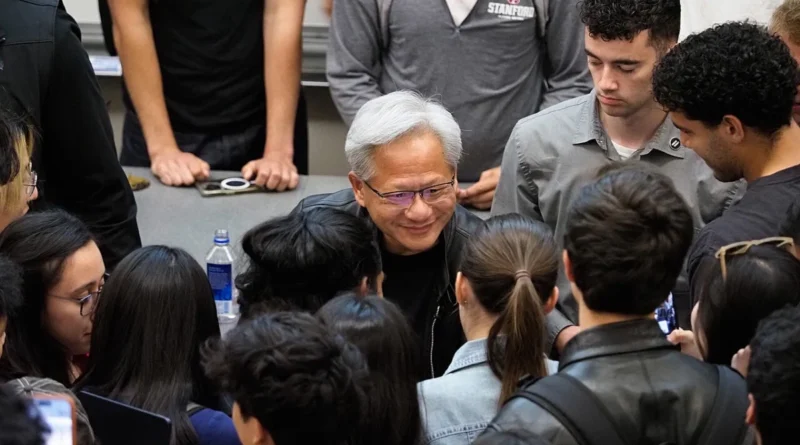
Nvidia reinstates Jensen Huang as CEO after resignation over affairs
Nvidia has reinstated Jensen Huang as chief executive, reversing its earlier decision to remove him after he resigned this month amid reports of extramarital affairs, including one with a businesswoman U.S. authorities suspect of spying for China.
The company’s shares rose 33% in New York on Monday, adding more than $1 trillion to its market value, according to The Guardian. President Donald Trump, who had publicly urged the board to bring Huang back, said the country needs his leadership.
Huang stepped down on Nov. 12. The board had said days earlier that he would not return, making Monday’s announcement a sharp about-face.
Board cites candor and leadership
In a statement, Nvidia said its directors had spoken with Huang and were satisfied with his candor and his ability to lead the company. The chipmaker said it had received input from senior levels of the U.S. government and was confident his reinstatement poses no national security risk.
Nvidia said an independent investigation into allegations that Huang was the target of a Chinese intelligence operation, including the affair with the alleged spy, is ongoing and will proceed to conclusion. Beijing denies the spying allegation.
Harvey Jones, the Nvidia chair appointed this month after Huang’s resignation, said the board believes Huang is the right person to lead the company and that his return is in the best interests of stockholders, employees, partners and customers.
“The Country needs Jensen’s leadership at NVIDIA in order to ensure the Success and Prosperity of not only the Company, but the American Economy.”
Trump wrote on Truth Social that he hoped the board would rehire Huang, calling it the best thing for the company and for the United States. He said the attorney general, Todd Blanche, had confirmed that the U.S. government does not possess evidence that Huang has engaged in any unlawful conduct.
Spy allegations under scrutiny
The reinstatement came hours after reports that Alice Huang, the Chinese businesswoman at the center of the scandal, had been in contact with an official in China’s spy agency while she was having an affair with Huang. People with knowledge of U.S. intelligence reports said she was in touch with the Chinese official until this autumn, according to The New York Times.
Huang built Nvidia from a video-game chip designer into the dominant supplier of AI processors, shaping its product roadmap, customer deals and ties with Washington along the way.
Ahead of the announcement, trading on the prediction site Polymarket pointed to growing expectations of his return, with the probability rising from about 10% to 18% overnight as Huang overtook another senior Nvidia executive, Ian Buck, in the market for the company’s next CEO.
Rene Haas, the Arm Holdings chief executive who had been approached to succeed Huang, has signed a new deal keeping him in his current role until 2033.
Elon Musk, who had also called for Huang’s return, posted on X: “Welcome back the main man,” alongside a picture of the two men shaking hands.
Analysts point to AI reliance
Dan Ives, a senior tech analyst, said the board had to reverse course because the alternative — a core company in the AI boom entering a crucial period without its founder and CEO — was the bigger risk to shareholders.
Sam North, a market analyst at the trading platform eToro, said Huang’s return underlines how much of the AI trade still rests on one man.
What happens next
The independent investigation into the spying allegations remains open, and its findings could shape how the company and Washington handle Huang’s position going forward. Nvidia has not indicated a timeline for its conclusion.